Benign Mesothelioma | Non-cancerous Tumors Develop in Mesothelium
Benign mesothelioma refers to non-cancerous tumors which develop in the mesothelium. However, it can be a warning sign that you are at risk for cancer. The term “benign mesothelioma” is confusing to many patients and their loved ones because when people use the term mesothelioma they are usually referring to malignant mesothelioma, which is cancer of the mesothelium. Left untreated, benign mesothelioma can be life-threatening, but those who seek treatment can usually make a full recovery. The discovery of benign mesothelioma can also alert patients and their doctors to the need for malignant mesothelioma screening.
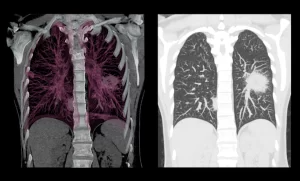
Mesothelioma is a type of cancer that most commonly affects the lining of the lungs and chest wall, although it can also occur in the lining of the abdomen or other internal organs. Mesothelioma is almost always caused by exposure to asbestos, a mineral fiber that was used in various industries for its heat-resistant and insulating properties. When asbestos fibers are inhaled or ingested, they can become embedded in the mesothelial lining of organs, leading to the development of malignant mesothelioma.
Malignant (cancerous) condition
“Benign mesothelioma,” is a term that can be somewhat misleading. Typically, mesothelioma refers to a malignant (cancerous) condition. If you hear the term “benign mesothelioma,” it is likely referring to a non-cancerous condition that affects the mesothelial lining of organs. The correct terminology for non-cancerous tumors that can affect the mesothelial lining is “benign mesothelial tumors” or “benign mesothelioma-like lesions.”
Benign mesothelial tumors
These benign mesothelial tumors are not related to asbestos exposure and are not considered a form of cancer. They are usually not life-threatening and do not spread to other parts of the body like malignant mesothelioma does. Treatment for benign mesothelial tumors may vary depending on the location and specific characteristics of the tumor, but they are generally managed with surgical removal if they cause symptoms or complications.
It’s important to note that malignant mesothelioma, the cancer associated with asbestos exposure, is a much more serious and aggressive condition, often with a poor prognosis. If you suspect that you or someone you know may have a mesothelial condition, it’s essential to consult with a medical professional for a proper diagnosis and treatment options.
Solitary Fibrous Tumors
Solitary fibrous tumors of the pleura affect the lung area. They have also been referred to as fibrous mesothelioma. They form in the lining of the lungs, and can cause difficulty breathing, chest pains, coughing, fatigue, and other health problems which can become serious or fatal. However, unlike malignant mesothelioma, the tumors do not spread and they respond well to treatment.
Solitary fibrous tumors can also form in the peritoneum, which is the part of the mesothelioma which lines the abdominal cavity and surrounds the abdominal organs.
Adenomatoid Tumors
Adenomatiod tumors are benign tumors which form in the mesothelium of the reproductive organs. They typically begin in the fallopian tubes of women and the epididymis of men. Adenomatoid tumors can also be found in other parts of the reproductive system and (rarely) in other parts of the body such as the adrenal glands.
Benign Cystic Mesothelioma
Benign cystic mesothelioma is much more common in women than in men; usually in women of reproductive age. Although it is not cancerous, it has a tendency to recur, and it can become malignant. The cysts are normally found in the pelvic area. When there are symptoms they are often similar to the symptoms of peritoneal mesothelioma.
Benign Mesothelioma Prognosis
Unlike malignant mesothelioma, which typically kills its victims within a year of diagnosis, benign mesothelioma can be successfully treated. In most cases the tumors can simply be removed and patients make a full recovery. Some types of benign mesothelioma tumors have a tendency to come back later and will need to be removed again.
All types of benign mesothelioma are an indicator that you may develop malignant mesothelioma, but that means that you have the opportunity to catch malignant mesothelioma very early when it is likely to respond well to treatment.
Benign mesothelioma is nowhere near as life-threatening as malignant mesothelioma, but it must be treated. Even though benign means non-cancerous, some benign tumors and cysts can become malignant. Benign mesothelioma can be very painful and if left untreated can cause life-threatening heath problems.
Benign mesothelioma, also known as solitary fibrous tumor of the pleura (SFTP),
Benign mesothelioma, also known as solitary fibrous tumor of the pleura (SFTP), is a rare medical condition that affects the lining of the lungs or other pleural tissues. Unlike malignant mesothelioma, which is cancerous and aggressive, benign mesothelioma is non-cancerous. It typically grows slowly and does not spread to other parts of the body.
Key characteristics of benign mesothelioma include:
- Non-Cancerous: It is not a form of cancer, which means it does not invade nearby tissues or metastasize to other parts of the body.
- Slow Growth: Benign mesothelioma tumors tend to grow slowly over time and may not cause noticeable symptoms for an extended period.
- Location: This condition primarily occurs in the pleura, the thin membrane that surrounds the lungs. However, it can also affect other parts of the body, such as the peritoneum (the lining of the abdominal cavity), pericardium (the lining around the heart), or the tunica vaginalis (the lining of the testicles).
- Symptoms: Benign mesothelioma may not produce any symptoms in the early stages. When symptoms do occur, they can be similar to those of other pleural or organ-related conditions, such as shortness of breath, chest pain, coughing, or abdominal discomfort, depending on the location of the tumor.
- Diagnosis: Diagnosis is typically made through imaging studies (such as CT scans and MRIs) and may involve a biopsy to confirm the non-cancerous nature of the tumor.
- Treatment: The primary treatment for benign mesothelioma is surgical removal of the tumor, which is often curative. In some cases, if the tumor is in an inaccessible or high-risk location, the doctor may choose to monitor it closely or use other therapies such as radiation therapy.
Benign mesothelioma is not cancerous
It’s important to note that while benign mesothelioma is not cancerous, it can still cause health issues, especially if it grows in a way that compresses or damages nearby organs or structures. Therefore, proper medical evaluation and treatment are essential for individuals diagnosed with this condition.